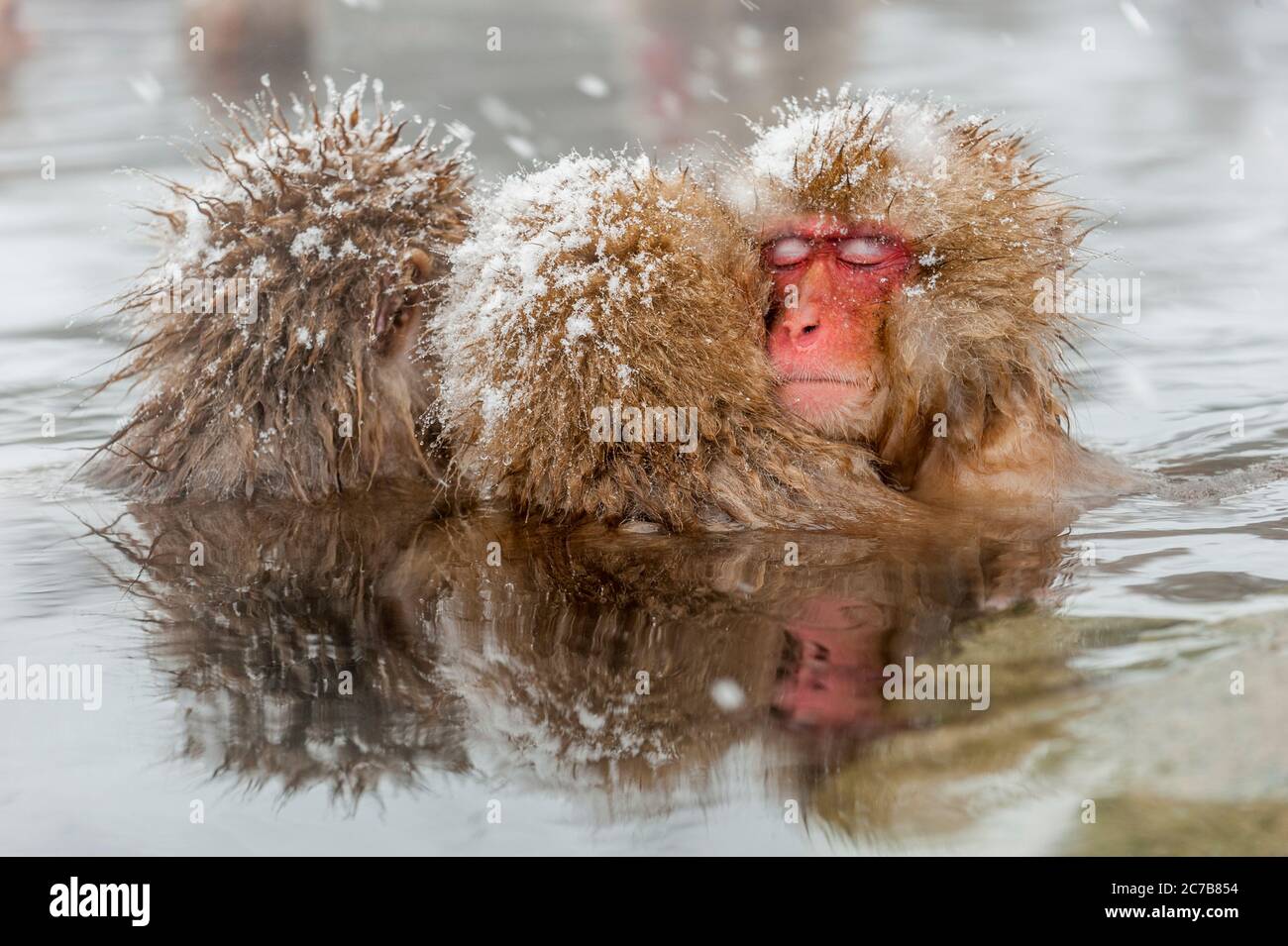
Picture this: it's freezing cold in the Japanese mountains, snow is falling, and steam is rising from a natural hot spring. Sitting in that warm water, looking completely relaxed, are a group of pink-faced monkeys with thick brown fur. These are Japanese macaques, better known as snow monkeys, and they're the only primates besides humans who have figured out how to survive harsh winters by soaking in hot springs. But there's more to these creatures than just their spa habits. One of them, a baby named Punch-kun, would capture hearts around the world in 2026 with his own story of survival.
What Exactly Is a Japanese Macaque?
Japanese macaques (Macaca fuscata) are medium-sized monkeys native to Japan. They're the northernmost-living non-human primates in the world, which is pretty impressive when you think about it. These monkeys can handle temperatures as low as -4°F (-20°C) and have been spotted at elevations up to 10,400 feet (3,180 meters).
- Weight: Males weigh about 25 lbs (11.3 kg), females around 18.5 lbs (8.4 kg)
- Height: Males reach 22 inches (57 cm), females about 20.5 inches (52.3 cm)
- Lifespan: Up to 28 years for males, 32 years for females in the wild
- Distinguishing feature: Bright pinkish-red face and butt (yes, really)
The Famous Hot Spring Bathing Monkeys
You've probably seen the photos: steam rising from the water, snow all around, and monkeys looking like they're at a luxury spa. This happens at Jigokudani Monkey Park in Nagano Prefecture, and it started completely by accident in 1963. Back then, the park was feeding monkeys near an outdoor hot spring meant for human guests. The monkeys avoided the water until one day, an apple rolled into the bath. A young monkey went after it and realized the water was warm. Pretty soon, others tried it, and now it's a winter tradition that's passed down through generations.Here's the crazy part: Scientists studied these monkeys and found that their stress levels dropped by about 20% after soaking in the hot springs. The behavior spreads just like human culture - first among friends, then from mothers to babies. Now about a third of all monkeys in the troop bathe regularly during winter.
Where Do Snow Monkeys Live?
Japanese macaques are found on three of Japan's main islands - Honshu, Shikoku, and Kyushu - plus some smaller islands. They're incredibly adaptable and live in everything from subtropical forests to subalpine regions. In the northern parts of their range, where it's colder, they hang out in cool temperate deciduous forests. In the south, they prefer evergreen broadleaf forests.During winter, they usually stay below 5,900 feet (1,800 meters) because, well, it's warmer down there. Their home range averages about 1.4 square miles (3.7 square km), though they travel more in some seasons than others. Southern monkeys might cover up to 3.2 miles (5.1 km) a day in August, while northern monkeys in winter only travel about half a mile (0.85-0.93 km) because conserving energy becomes more important than finding food that's harder to get.
Social Life: It's Complicated
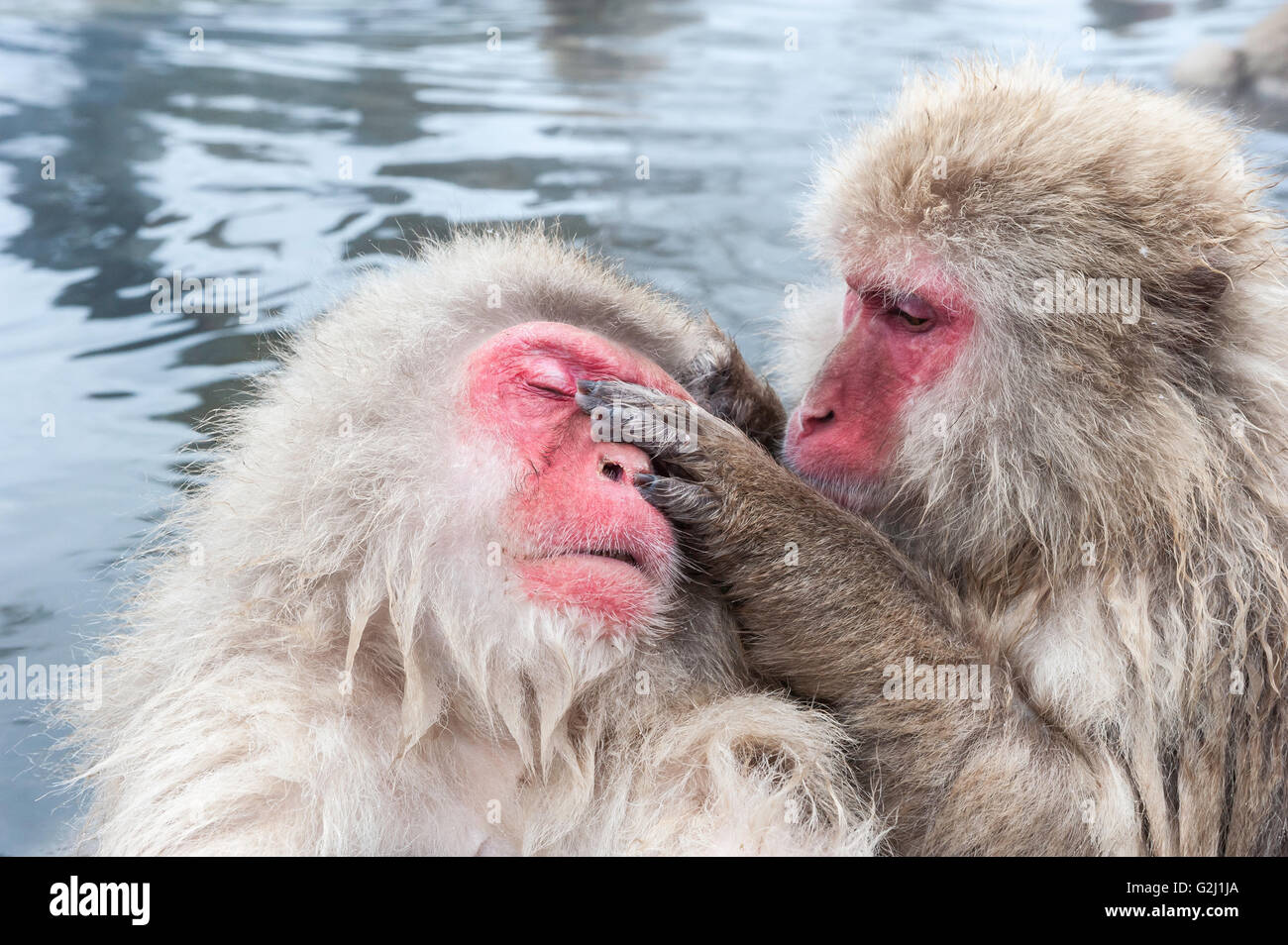
If you thought human social dynamics were complicated, spend a day with a troop of Japanese macaques. These monkeys live in groups that can range from a few dozen to hundreds of individuals. Their social structure is female-bonded, meaning daughters stay with their birth troop while males leave when they mature. This helps prevent inbreeding and keeps genetic diversity up.Hierarchy is everything in monkey society. High-ranking individuals get first dibs on food, and daughters inherit their mother's rank. It's pretty rigid - a monkey's status is largely determined by their family's position in the troop. But sometimes, particularly smart or aggressive individuals can climb the social ladder and bring their whole family with them.Grooming is how they maintain relationships. They spend hours picking through each other's fur, removing parasites and strengthening social bonds. It's like networking, but with more personal attention. Most grooming happens between mothers and daughters, and it's not just about hygiene - it's about politics and relationships.
What's on the Menu?
Japanese macaques are what scientists call generalist omnivores, which is a fancy way of saying they'll eat pretty much anything. Their diet changes with the seasons:
- Summer (June, September-November): Mostly fruits, some seeds
- Spring (April-May) and Winter (December-March): Flowers and nectar
- Winter months: Lots of fibrous mature leaves
- April-June: Young, easier-to-digest leaves
Culture and Tool Use
Here's something that might blow your mind: Japanese macaques have culture. Not human culture, obviously, but they pass down learned behaviors from one generation to the next. The most famous example started in 1953 on Kojima Island, when a young female named Imo started washing sweet potatoes in water to get the sand off. At first, others copied her - mostly her mother and a playmate. Then it spread to her relatives, then their friends. By 1958, 15 of the 19 juvenile monkeys were washing their potatoes. Eventually, it became standard behavior that every new generation learned from their mother.Later, Imo figured out that if she threw wheat mixed with sand into water, the sand would sink and the wheat would float. Pretty clever, right? This habit also spread through the troop. These behaviors show that monkeys can innovate, and new ideas can spread through social groups just like human cultural trends.
Communication: More Than Just Screaming
Japanese macaques have a pretty sophisticated communication system. Scientists have identified six different types of vocalizations, including peaceful, defensive, aggressive, and warning calls. More than half of their vocalizations are peaceful or soothing - they're not always fighting!When they spot a predator or human threat, they make a specific hollering sound to warn others. Interestingly, they've also been observed making warning calls when Japanese giant flying squirrels glide overhead. Researchers think this might be a case of mistaken identity - the squirrels probably look like predatory birds from below.But it's not just about vocal sounds. These monkeys also communicate through body language and facial expressions. They'll flatten their ears, bare their teeth, raise their eyebrows, and even lip-smack to convey different messages. Subordinate monkeys will grimace, display their hindquarters, or avoid eye contact to show submission to higher-ranking individuals.
Mating and Family Life
Let's talk about love, monkey-style. Japanese macaques are polygynandrous, which means both males and females have multiple partners during breeding season. Courtship lasts about 1.6 days on average, during which the pair feeds, nests, and travels together. Females prefer to spend time with higher-ranking males, but if a high-ranking male spots a lower-ranking male courting someone, he might try to break it up.Females reach sexual maturity around 3.5 years, males around 4.5 years. Breeding usually happens between March and September, and pregnancy lasts about 5-6 months. When it's time to give birth, females typically leave the troop to find a private, safe place. Twins are super rare - only about one in every 488 births.Infant mortality is pretty high, with about 28% not making it to their first birthday. For the first four weeks, infants are carried near their mother's abdomen. They continue to be carried, either on the abdomen or back, until they're about a year old. Mothers will often nurse their offspring for up to 2.5 years if they don't have another baby in the meantime.
Punch-kun: The Snow Monkey That Went Viral
In July 2025, a baby Japanese macaque was born at Ichikawa City Zoo. Just five days later, his mother rejected him, leaving zookeepers to raise him by hand. They named him Punch, and to help him feel less lonely, they gave him an IKEA Djungelskog orangutan plush toy as a surrogate mother. Punch bonded with that toy immediately, carrying it everywhere, sleeping with it, and finding comfort in it when he felt overwhelmed or alone. In February 2026, Punch's story went viral globally. People saw photos and videos of this tiny monkey clinging to his plush surrogate mother, and something about it resonated deeply. Maybe it was the vulnerability, maybe it was the rejection he'd experienced, or maybe it was just the undeniable cuteness. Whatever it was, Punch became an overnight sensation.Punch's story highlights something important about Japanese macaques - they're deeply social creatures that rely on strong bonds with their mothers and troop members. When those bonds are disrupted, as in Punch's case, the emotional impact is real. Zookeepers worked hard to help Punch socialize with other monkeys, and as of 2026, he's gradually learning to navigate monkey society, though it's been a slow process.
Conservation Status
The good news is that Japanese macaques are listed as Least Concern by the IUCN Red List. There are approximately 100,000 of them in the wild, and their populations are relatively stable. However, they do face some threats:
- Deforestation reduces their natural habitat
- They're considered agricultural pests and thousands have been killed since 1998
- In some areas, they've become habituated to humans and lose their natural fear of people
Japanese macaques are more than just the cute monkeys in hot spring photos. They're complex, social, intelligent creatures with rich cultural traditions, sophisticated communication systems, and surprising adaptability. From the snow-covered mountains of northern Japan to the subtropical forests of the south, these monkeys have carved out a niche as the northernmost primates (besides us, of course) through sheer resilience and ingenuity. Whether they're soaking in volcanic hot springs, washing sweet potatoes, or, in Punch-kun's case, finding comfort in a plush orangutan surrogate, snow monkeys remind us that the line between human culture and animal behavior might be thinner than we think.