
Tucked away in Chiba Prefecture, just outside Tokyo, sits a modest zoological garden that few people talked about until February 2026. That's when everything changed. A baby monkey named Punch turned this quiet local zoo into an international destination overnight.
The Zoo Behind the Viral Sensation
Ichikawa City Zoological and Botanical Gardens (市川市動植物園) isn't some massive facility like you'd find in a big city. It's a cozy place where locals would take their kids on weekends, maybe see some monkeys, pet some goats, call it a day. But then Punch came along.
The zoo opened back in 1986 and has been serving the community for decades. It's got your standard zoo animals - Japanese macaques, red pandas, some farm animals. Nothing fancy. But sometimes the most unassuming places end up making the biggest waves.
The zoo opened back in 1986 and has been serving the community for decades. It's got your standard zoo animals - Japanese macaques, red pandas, some farm animals. Nothing fancy. But sometimes the most unassuming places end up making the biggest waves.
Punch's Home: Monkey Mountain
The star attraction at Ichikawa City Zoo is the Monkey Mountain, home to about 60 Japanese macaques. This is where Punch lives, plays, and slowly learns how to be part of a monkey troop.
The enclosure isn't huge - it's a rocky, grassy area with places to climb and hide. Before Punch went viral, you could probably watch the monkeys for 10 minutes and move on. Now? People line up for hours just to catch a glimpse of one tiny monkey carrying around an orange plush toy.
What makes Monkey Mountain special isn't its size or design. It's the story unfolding there - a rejected baby finding his place, with some help from zookeepers and an IKEA stuffed animal.
The enclosure isn't huge - it's a rocky, grassy area with places to climb and hide. Before Punch went viral, you could probably watch the monkeys for 10 minutes and move on. Now? People line up for hours just to catch a glimpse of one tiny monkey carrying around an orange plush toy.
What makes Monkey Mountain special isn't its size or design. It's the story unfolding there - a rejected baby finding his place, with some help from zookeepers and an IKEA stuffed animal.
How to Visit Ichikawa City Zoo
If you're planning to visit Punch and the zoo, here's what you need to know:
Location: Ichikawa, Chiba Prefecture (about 30 minutes from central Tokyo)
Admission: Just 300 yen for adults - seriously, that's like two bucks
Getting There: Take the JR Sobu Line to Ichikawa Station, then it's a 15-minute walk
Best Time to Visit: Weekdays are less crowded, though honestly, since Punch went viral, there are no quiet days anymore
What Else to See: Besides Punch, you can check out red pandas, capybaras, and various farm animals. There's also a botanical garden section.
Location: Ichikawa, Chiba Prefecture (about 30 minutes from central Tokyo)
Admission: Just 300 yen for adults - seriously, that's like two bucks
Getting There: Take the JR Sobu Line to Ichikawa Station, then it's a 15-minute walk
Best Time to Visit: Weekdays are less crowded, though honestly, since Punch went viral, there are no quiet days anymore
What Else to See: Besides Punch, you can check out red pandas, capybaras, and various farm animals. There's also a botanical garden section.
The IKEA Connection
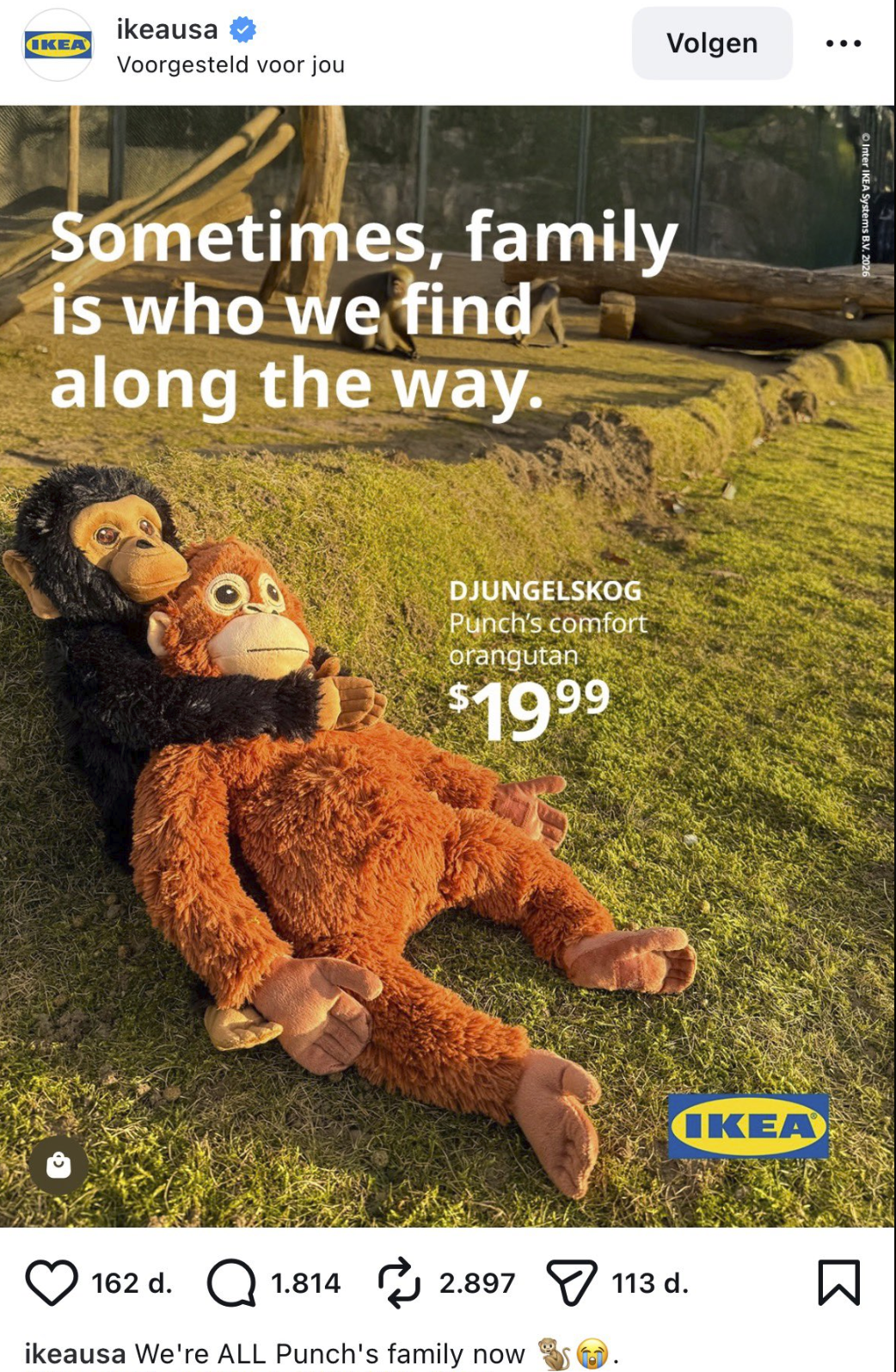
One of the wildest parts of Punch's story is how it connected this small Japanese zoo to a Swedish furniture company. When zookeepers gave Punch a Djungelskog orangutan plushie from IKEA, nobody expected it to become a symbol of hope for rejected monkeys everywhere.
IKEA Japan eventually caught wind of the story and donated 33 stuffed toys to the zoo. The CEO even visited in person. Now that orange orangutan toy is sold out in stores worldwide, all because a lonely monkey at a small zoo in Japan needed a friend.
IKEA Japan eventually caught wind of the story and donated 33 stuffed toys to the zoo. The CEO even visited in person. Now that orange orangutan toy is sold out in stores worldwide, all because a lonely monkey at a small zoo in Japan needed a friend.
What the Viral Fame Means for the Zoo
Before February 2026, Ichikawa City Zoo was just another local attraction. Now it's dealing with crowds they never imagined. The zoo had to issue statements asking for patience as they manage the influx of Punch fans.
Zoo officials have been careful to remind visitors that Punch is still a wild animal learning to navigate complex social dynamics. They ask people not to feel too sorry for him, noting that he shows mental strength despite the challenges.
The zoo's social media accounts, once posting about routine zoo activities, now provide updates on Punch's progress - who he's interacting with, how he's eating, whether he's making friends. It's like watching a real-life nature documentary unfold in real time.
Zoo officials have been careful to remind visitors that Punch is still a wild animal learning to navigate complex social dynamics. They ask people not to feel too sorry for him, noting that he shows mental strength despite the challenges.
The zoo's social media accounts, once posting about routine zoo activities, now provide updates on Punch's progress - who he's interacting with, how he's eating, whether he's making friends. It's like watching a real-life nature documentary unfold in real time.
Ichikawa City Zoo teaches us something interesting about the internet age. A small local attraction can become a global sensation overnight, all because of one relatable story. Punch isn't the first animal to go viral from a zoo, but there's something about his journey - the rejection, the resilience, that stuffed orangutan - that hits different. The zoo staff are just trying to do right by their animals while the world watches. And millions of people are rooting for a tiny monkey to find his place in the world.