
A video clip that broke hearts around the world showed baby Punch being dragged across the ground by an adult monkey. For millions watching online, it looked like bullying. But zookeepers knew something different was happening – Punch was learning the hard way how to be a monkey.
The Rocky Start: Punch's First Days with the Troop
When Punch was reintroduced to the troop at Monkey Mountain in January 2026, things didn't go smoothly. Born July 26, 2025, he'd been abandoned by his mother and hand-raised by zookeepers. Now he faced a group of 60 monkeys who had their own social rules and hierarchy.
His early attempts to connect were pretty awkward. He'd approach another baby monkey, trying to make friends, but get ignored. Then when he sat down looking defeated, an adult would come over and drag him away.
The internet went nuts over this. People cried, got angry, started hashtags like #HangInTherePunch. But what looked like rejection to human eyes was actually something more complicated.
His early attempts to connect were pretty awkward. He'd approach another baby monkey, trying to make friends, but get ignored. Then when he sat down looking defeated, an adult would come over and drag him away.
The internet went nuts over this. People cried, got angry, started hashtags like #HangInTherePunch. But what looked like rejection to human eyes was actually something more complicated.
Why Was Punch Getting 'Scolded'?
Here's something most people didn't realize – that adult dragging Punch away? She was probably the other baby's mother. In her eyes, Punch was annoying her kid, and she was basically saying "back off" in monkey language.
The zoo explained it pretty clearly: "When Punch approached another baby monkey, the baby avoided him. Punch sat down, apparently giving up. Then he was scolded and dragged by an adult."
This wasn't unusual behavior for macaque troops. They have strict social structures, and Punch – without a mother to guide him – was breaking rules he didn't even know existed.
What's interesting is that Punch kept trying. Most animals might retreat after getting pushed around, but this little guy was what one keeper called "mentally strong".
The zoo explained it pretty clearly: "When Punch approached another baby monkey, the baby avoided him. Punch sat down, apparently giving up. Then he was scolded and dragged by an adult."
This wasn't unusual behavior for macaque troops. They have strict social structures, and Punch – without a mother to guide him – was breaking rules he didn't even know existed.
What's interesting is that Punch kept trying. Most animals might retreat after getting pushed around, but this little guy was what one keeper called "mentally strong".
The Turning Point: Onsing's Embrace
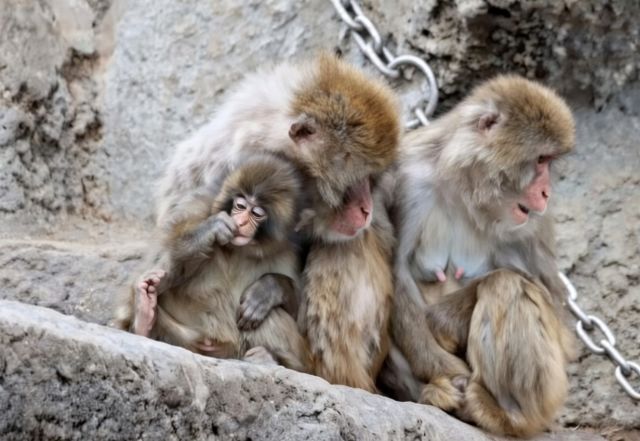
Then came February 20, 2026 – the day everything changed. A video started circulating showing something remarkable. An adult monkey named Onsing reached out and drew Punch into a firm, reassuring embrace.
This wasn't just kindness. In the primate world, grooming is everything. It's how they build trust, strengthen bonds, and show who's part of the group. Another video captured an adult gently picking through Punch's fur – the ultimate sign of acceptance.
People's reactions were intense. One person commented: "You guys don't know how much I needed this." Another admitted: "Didn't know I would be weeping at a baby monkey being accepted by other monkeys, but here we are."
Punch was finally fitting in.
This wasn't just kindness. In the primate world, grooming is everything. It's how they build trust, strengthen bonds, and show who's part of the group. Another video captured an adult gently picking through Punch's fur – the ultimate sign of acceptance.
People's reactions were intense. One person commented: "You guys don't know how much I needed this." Another admitted: "Didn't know I would be weeping at a baby monkey being accepted by other monkeys, but here we are."
Punch was finally fitting in.
Learning Monkey Social Skills the Hard Way
What's wild about Punch's story is how he had to learn social skills that most monkeys pick up naturally from their mothers. Without that guidance, he was basically a kid trying to navigate a school playground without understanding any of the unwritten rules.
The zookeepers noticed something cool though – Punch was a quick study. Even when other monkeys scolded him, he'd bounce back fast. He'd watch, adjust his behavior, and try again.
By late February 2026, Punch was regularly seen playing with other baby monkeys. He'd climb on their backs, share food, and actually participate in group activities. His stuffed orangutan toy (nicknamed "Ora-Mama" by fans) was still around, but he needed it less.
Zoo keeper Shumpei Miyakoshi put it perfectly: "He's actively engaging with other monkeys, and I can feel he's growing up."
The zookeepers noticed something cool though – Punch was a quick study. Even when other monkeys scolded him, he'd bounce back fast. He'd watch, adjust his behavior, and try again.
By late February 2026, Punch was regularly seen playing with other baby monkeys. He'd climb on their backs, share food, and actually participate in group activities. His stuffed orangutan toy (nicknamed "Ora-Mama" by fans) was still around, but he needed it less.
Zoo keeper Shumpei Miyakoshi put it perfectly: "He's actively engaging with other monkeys, and I can feel he's growing up."
Why Socialization Matters for Monkeys
People sometimes wonder why the zoo didn't just keep Punch separate if he was having such a hard time. But here's the thing – macaques are incredibly social animals. In the wild, a monkey alone is basically a dead monkey.
They need troops for protection, for finding food, for raising young. Punch's future wasn't as a pet or a permanent captive – it was as part of that monkey community. The zoo's job was to help him get there, even if the process looked painful to outsiders.
What's remarkable is how quickly Punch adapted when given the chance. Within weeks of that first embrace, he was eating without help, playing independently, and fully integrated into the troop dynamics.
They need troops for protection, for finding food, for raising young. Punch's future wasn't as a pet or a permanent captive – it was as part of that monkey community. The zoo's job was to help him get there, even if the process looked painful to outsiders.
What's remarkable is how quickly Punch adapted when given the chance. Within weeks of that first embrace, he was eating without help, playing independently, and fully integrated into the troop dynamics.
Punch's journey from lonely outcast to accepted troop member captured something universal about the struggle to fit in. Maybe that's why millions of people rooted so hard for him – everyone knows what it feels like to be the odd one out, trying to find their place. The fact that this little macaque, against all odds, found his way in makes his story worth following.